

Learning Python in the beginning is seemingly simple. You write a few lines, the code runs, and it’s tempting to think you’ve got it. Then you try to build something yourself and… nothing works!? It turns out that all the information you learned didn’t find an outlet.
That’s the place challenging projects mass. Not flashy. Not a giant app. Just projects that make you think, break things, and slowly connect the dots between syntax and actual behavior.
This list is about the basics. Python projects to start your programming journey. If you are not a beginner then these Python projects would serve as checklist go through.
This list provides you exit screenshots. Use it as a guide for creating programs for individual projects.
1. The computer that lies to you
A number-guessing game where the computer occasionally makes a wrong guess on purpose. He will later admit that he messed with you and show how many times he lied. This adds a much needed twist to the traditional high low numbers game.
You would learn to:
random+ ranges- loops + conditions
- counters and state
- input verification
Link: Link to the code
2. Skeptical password generator
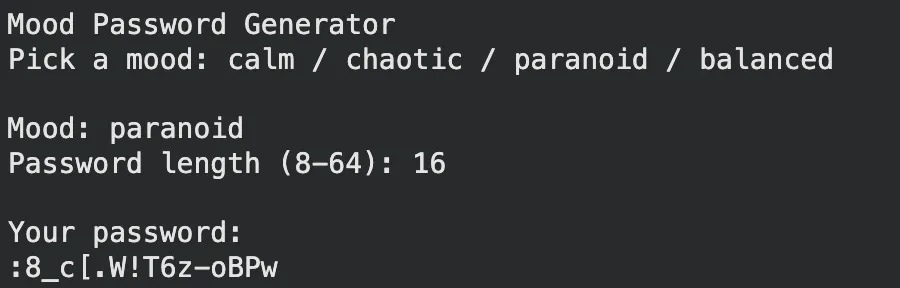
Instead of choosing length and continuation, the user chooses a mood as calm, chaotic, or balanced, and the generator changes its character accordingly. It targets individuals who are looking for those extra secure passwords.
You would learn to:
- strings + character sets
- randomness + weighting
- functions
- basic security intuition
Link: Link to the code
3. Honest calculator
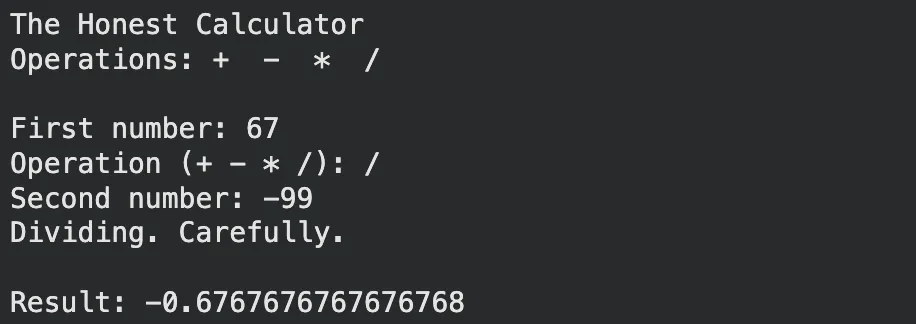
A calculator that calculates correctly, but also comments on what you’re doing. Divide by zero? He will refuse and gently roast you. It supports pure math inputs.
You would learn to:
- functions for operations
try-except- input manipulation
- net control flow
Link: Link to the code
4. A to-do list to remind you
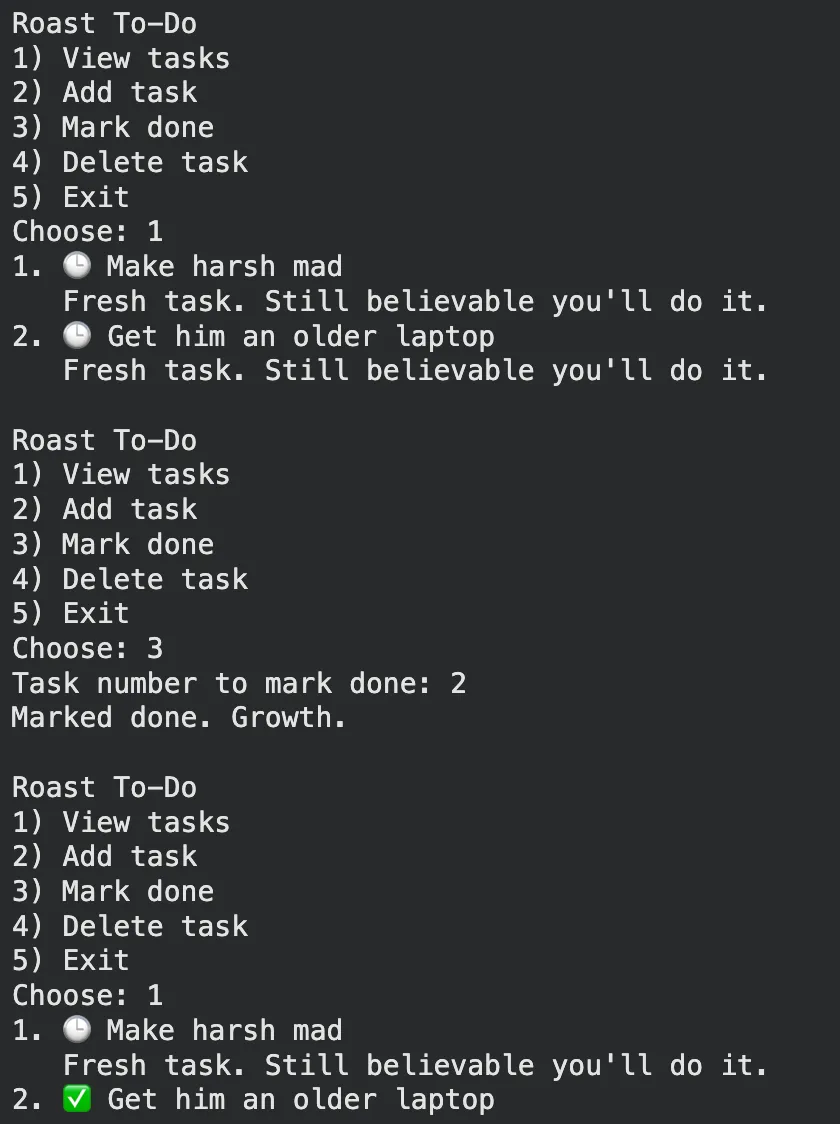
A task app that remembers tasks and calls you when you’ve ignored them for too long. It’s still supportive…sort of. It uses more beginner level concepts like data structures, file I/O, timestamps and many more.
You would learn to:
lists/dictsfor tasks- timestamps (basic)
- saving file (JSON/text)
- CRUD logic
Link: Link to the code
5. Adaptive rock, paper, scissors
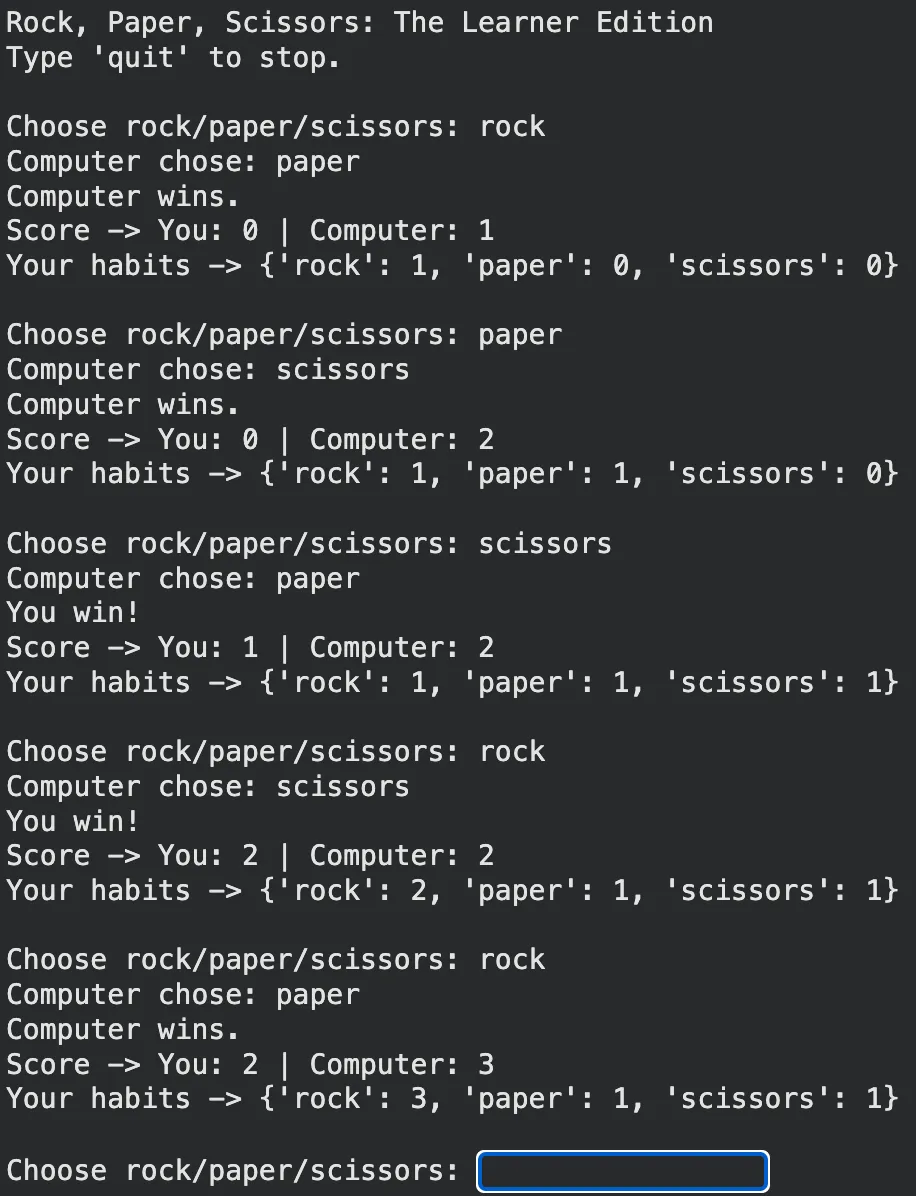
You’re playing a normal RPS game, except the computer is watching your choices and starting to challenge your habits. Simple to learn, surprisingly fun. Ultimate Rock-Paper-Scissors Emulator.
You would learn to:
- dictionaries for frequency
- the logic of game rules
- stand across the wheels
- basic probabilistic thinking
Link: Link to the code
6. Generator of unnecessary facts
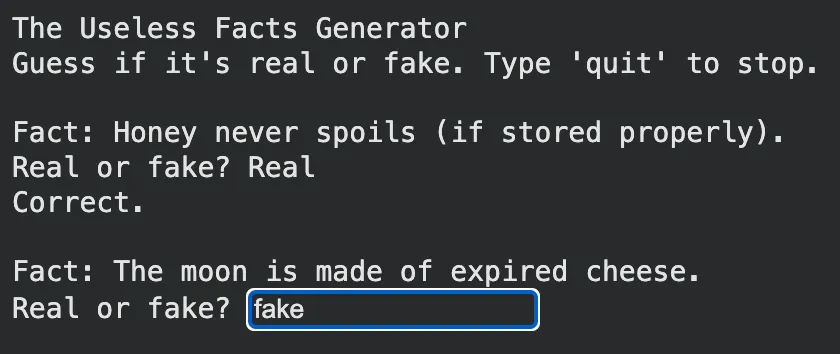
It reads weird facts from a local file and serves them randomly. Some facts can be marked as false/real and the user tries to guess which one. It tests knowledge and intuition.
You would learn to:
- reading the file
- splitting/cleaning text
- contingency
- simple scoring
Link: Link to the code
7. Email the detective
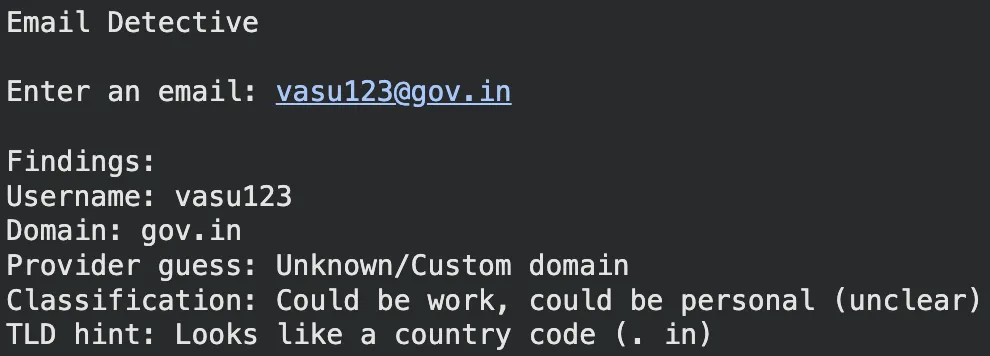
Given an email address, it extracts the username/domain and then guesses: personal vs. work, likely provider, maybe domain based region. Tests string parsing and pattern matching capabilities.
You would learn to:
- chain analysis
- validation rules
- pattern matching
- writing clear output
Link: Link to the code
8. A dice game that slowly cheats
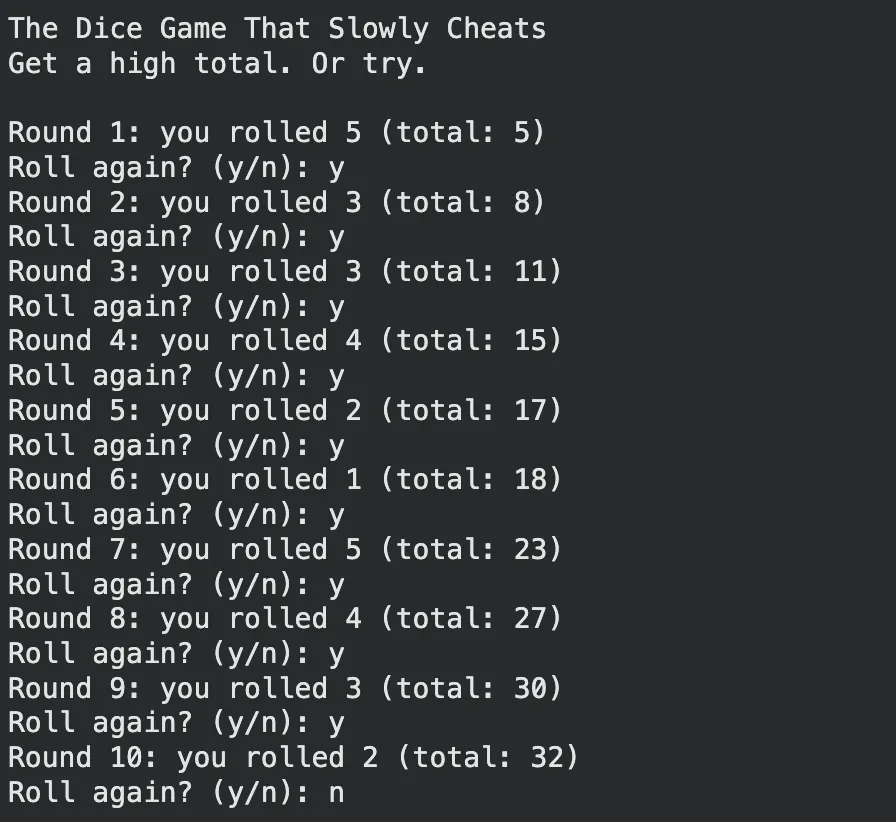
It’s fair at first. Then the odds gradually tilt against you. The challenge is to notice it, and the reveal at the end is the point. Unobservable addition of mild prejudices, emulation of shady slot machines.
You would learn to:
- random distributions
- hidden state variables
- loops + scoring
- assumption testing
Link: Link to the code
9. A quiz that adapts to you

A quiz that gets harder when you do well and eases up when you struggle. It’s personal, even if it’s just logic. Finest conditional branching using nested data structures.
You would learn to:
- data structures for questions
- scoring and levels
- conditional branching
- simple draft rules
Link: Link to the code
10. Electronic magazine
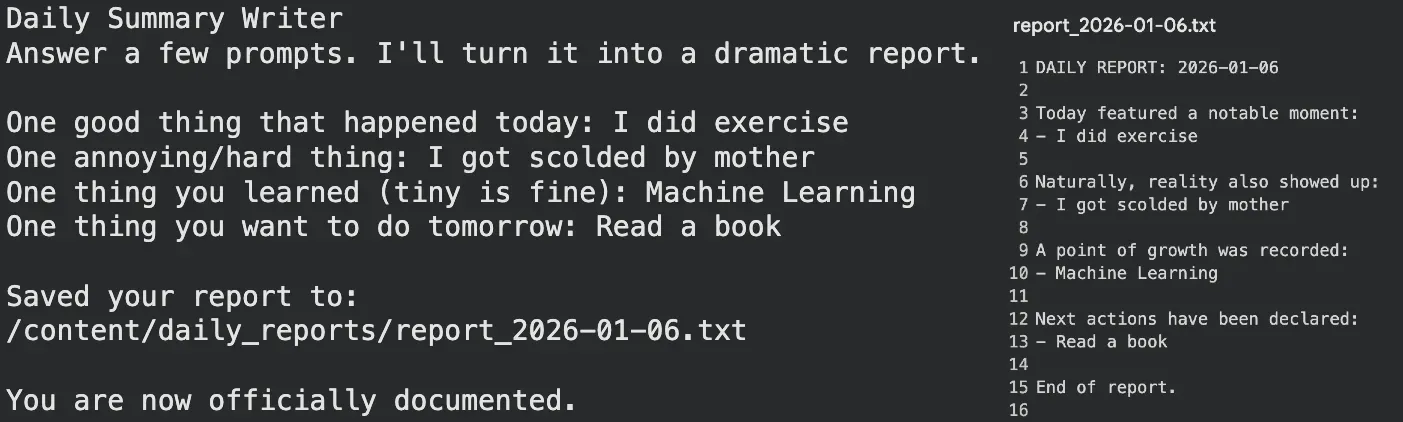
You answer a few prompts about your day and the program writes a dramatic “daily report” and saves it with today’s date. An e-journal at its best, without the hassle of lifting, pencil and paper.
You would learn to:
- formatted text output
- file write
- working with data
- creating a repeatable tool
Link: Link to the code
The dual nature of…projects!
These projects not only offer challenges for those testing their abilities, but would also serve as a satisfying mini-project that could be used to demonstrate skills. I recommend viewing Colab code links only if:
- You are unable to write code for it.
- You have written working code but are looking for improvements/ideas.
How to LEVEL UP
As you go through this list – or skip it here – do the following prompt with each code:
- Add file storage instead of memory-only storage
- Improve input validation (
try-except) - Add a simple GUI using Tkinter
- Overwrite it with functions
These enhancements ensure that you create functional code that doesn’t crash with errors, is visually appealing, and conforms to Python’s style guides.
If you weren’t able to work through this list, you might consider taking a free Python course.
Frequently Asked Questions
Answer: Writing small scripts works, but building real projects exposes gaps between knowledge of syntax and understanding of behavior.
A: They focus on basics and thinking, not flashy features or oversized apps.
A: Only if you are stuck or want to improve a working solution, not before you try it yourself.

I specialize in reviewing and improving AI-driven research, technical documentation and content related to emerging AI technologies. My experience includes training artificial intelligence models, data analysis, and information retrieval, allowing me to create content that is both technically accurate and accessible.
Sign in to continue reading and enjoy content created by experts.