
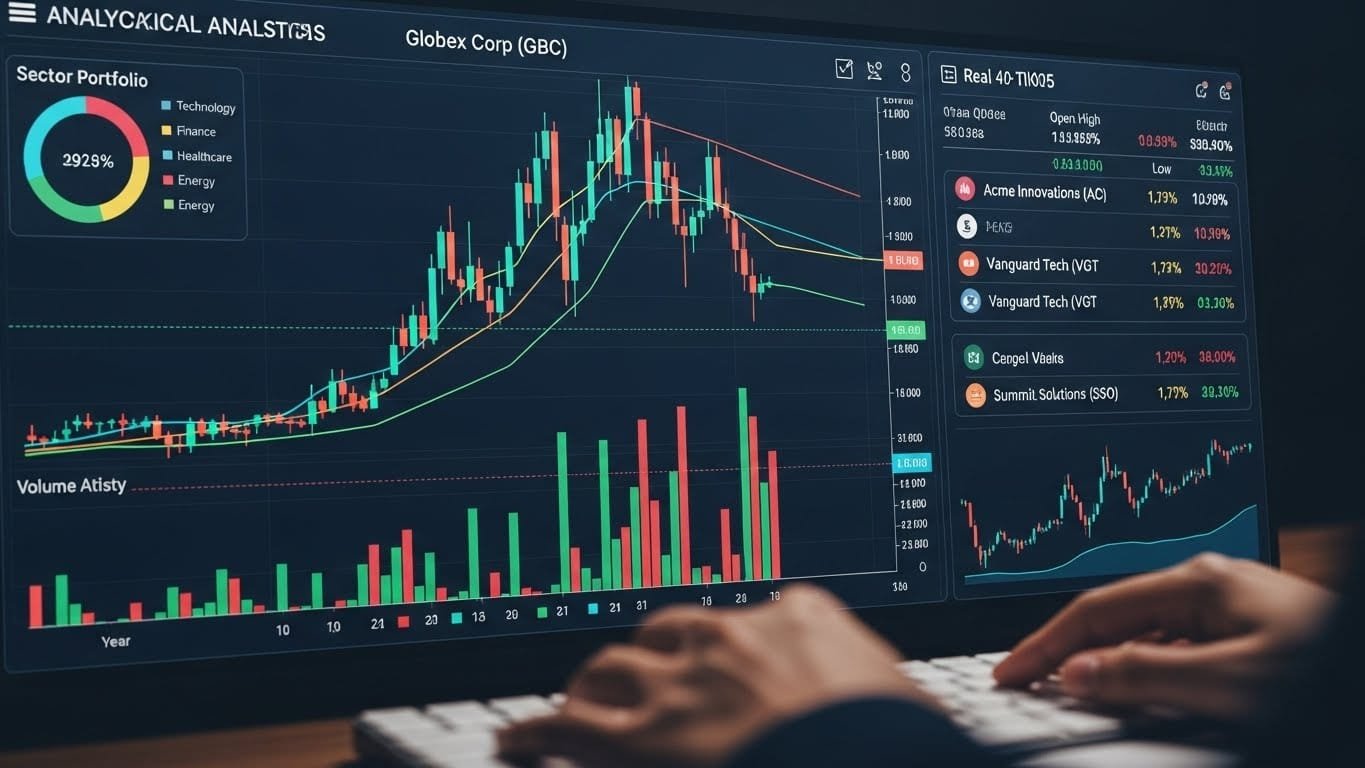
Something we’ve written about a lot at Smart Data Collective is how data analytics supports effective stock trading strategies. It is a topic that connects market behavior, trader decision-making and the growing role of structured data in financial choices.
You may have already noticed that traders rely on numbers, patterns and signals to guide decisions rather than instinct alone. It is helpful to understand why analytics has become so critical to trading success and why interest in this topic continues to grow. Keep reading to learn more.
Learn the basics of stock trading with proven strategies that work. A day trading simulation environment allows you to test these strategies without risking real capital. Learn effective techniques used by professional traders to identify opportunities and manage risk.
From technical analysis to fundamental evaluation, discover the strategies that separate successful traders from the rest.
Why data analysis is important in stock market trading
It is common knowledge that modern trading depends on access to large volumes of market data. You can observe how price movements, volume shifts and historical trends offer clues about potential opportunities. A report by Fortune Business Insights states that the global market for financial analytics was valued at $9.68 billion last year. It’s a figure that reflects how much capital is flowing toward tools that support data-driven business decisions.
You can also see analytics at work in how traders manage risk. It is common for data patterns to indicate unusual volatility or correlations that may signal danger. These insights help traders avoid making decisions based purely on emotion during market swings.
There are clear signs that analytics is becoming standard practice in many finance-related sectors. A report by Imarticus Learning states that 93% of businesses will use data analytics within the next four years. You can expect business firms to follow suit as competition pushes them to use data more deeply.
Not only large companies benefit from analytical tools. You can use similar methods on a smaller scale by studying historical price data and fundamental indicators. These approaches allow individual traders to make decisions based on evidence rather than speculation.
You can also see how artificial intelligence is changing the way analytics are used in trading. It is increasingly common for algorithms to scan markets faster than humans can react. Stanford Report’s Dylan Walsh describes how an alpha-seeking AI fund manager outperformed 93% of mutual fund managers by an average of 600%.
There are practical reasons why such results attract marketers’ attention. You can review past performance, test strategies and adjust rules before risking capital. It’s a process that reduces guesswork and improves discipline over time.
It is clear that data analytics supports a better structure of business decisions. You can combine market data with risk controls to stay consistent even as conditions change. These habits often separate prepared traders from those who rely on impulse.
It is useful to think of the analysis as a guide rather than a guarantee. You can use the data to inform entries, exits and position sizes while maintaining uncertainty. It is this balance that makes analytics useful in many trading styles.
As data sources and tools become more available, you can continue to refine your approach. Traders who understand analytics are likely to stay better prepared for changing markets.